
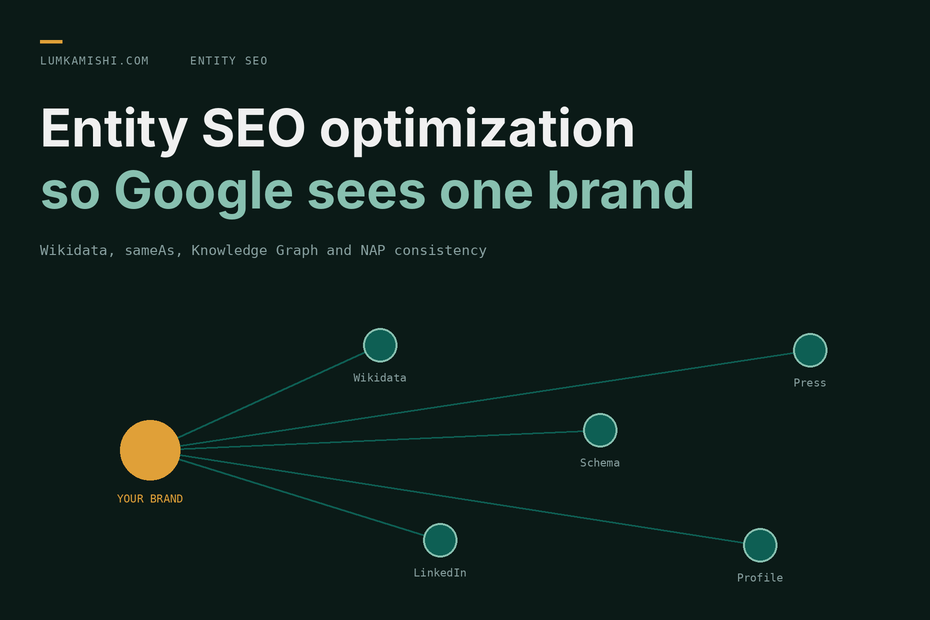
Entity SEO Optimization is the work of making Google and AI systems recognize your brand, product, or name as one consistent, disambiguated entity, instead of a string of keywords that happens to rank for a while. After reading this, you will be able to check whether Google and AI systems already hold a record of your brand as that kind of specific entity, and you will have a sequence of technical and off-site steps to build that record if they don’t.
Is SEO still worth it in the AI era, and where does GEO fit?
SEO is not dead. Organic search still converts at a lower cost per lead than paid channels. Current estimates put that cost between $14 and $31 depending on industry. Monthly paid spend climbs fast once you scale volume, against that lower organic baseline. That gap is why organic acquisition remains a budget line for small businesses even as AI Overviews and chat-style answers change how results get displayed.
What changed is the surface the work targets. Generative engine optimization (GEO) is a separate discipline from classic SEO: it optimizes content to be quoted inside AI-generated answers (ChatGPT, AI Overviews, Perplexity) rather than to rank a blue link. Entity SEO sits underneath both.
A system can only quote you by name if it has first resolved who or what you are. That resolution step is exactly the problem entity work solves. A GEO strategy cannot produce a citation if the underlying entity is still ambiguous. The honest tradeoff: GEO tactics (answer-first formatting, direct quotability) help you get cited once an entity exists. They leave untouched a brand Google hasn’t disambiguated yet.
What Entity SEO Optimization Means?
An entity is a specific, uniquely identifiable thing: a person, a company, a product, a place. Google’s Knowledge Graph stores entities as nodes with attributes and relationships, not as pages or keywords. “Apple Inc.” is an entity. “The Golden Gate Bridge” is an entity. “best running shoes” names a category; it does not identify one specific thing, so it isn’t an entity. Google entities come from Wikipedia, Wikidata, schema.org markup, and crawled web signals that get cross-checked against each other.
When enough independent sources agree that the “Jessica Smith” who wrote a blog post is the same “Jessica Smith” with the LinkedIn profile and the conference bio, Google merges those references into one canonical entity record. Earning that merge is what entity SEO optimizes for.
How Google actually knows things (and where it doesn’t)?
Google doesn’t know facts the way a person does. It aggregates claims from multiple sources. It weighs how often independent sources agree. It stores the resulting consensus as a fact. That mechanism explains why a single wrong Wikipedia edit or a stale directory listing can sit in search results for months. The system counts agreement; it does not verify truth from first principles.
Knowledge panels have shown wrong founding dates, wrong addresses, and wrong “people also search for” associations when the underlying source data was wrong or gamed. Treat every fact you want attached to your entity as something you have to state identically, repeatedly, across sources. Google reads agreement, not intent.
The Knowledge Graph, MID identifiers, and the API’s free tier
Every entity Google holds in the Knowledge Graph carries a machine ID (MID). It looks like a string such as /m/0k8z, and it identifies that node internally. You can’t look up a MID through a normal search box. Google’s Knowledge Graph Search API does this instead: it returns the MID and attributes for a query term, called via GET https://kgsearch.googleapis.com/v1/entities:search.
A returned result with a description matching your business confirms Google already holds a distinct entity for you. No result means it hasn’t resolved one yet, regardless of how much content you’ve published. The API has historically offered a free query allowance before billing kicks in.
The Knowledge Graph Search API quota and pricing tier allow 100,000 read calls per day per project at no charge. Confirm the live limit in Google’s Cloud Console before relying on it for bulk entity audits. Google’s own Knowledge Graph is a proprietary, Google-only database. It is separate from general-purpose graph databases like Neo4j that other organizations run for unrelated applications. NASA uses Neo4j for a knowledge graph of historical lessons learned to break down data silos, since that claim circulates widely but isn’t something to state without a source. Google continues to lean on Knowledge Graph data inside AI Overviews. Those features still need to attribute a fact to a disambiguated source rather than a string match.
Semantic search vs keyword search
Semantic search matches meaning and relationships between concepts. It does not require the literal word string to appear in the query. A search for “fruit that helps you sleep” can surface pages about kiwis and cherries even though neither word appears in the query. Embeddings (numerical representations that place related concepts near each other in vector space) let the system connect those entities to sleep. Google has ranked by query intent since the Hummingbird update, moving away from exact-match keyword matching. Large language models use the same embedding approach to generate answers. That shared mechanism is why entity consistency now matters to LLM visibility as much as to classic rankings. The table below separates what each paradigm matches on and what it rewards.
| Dimension | Keyword/text search | Semantic/entity search |
|---|---|---|
| Matches on | Literal word strings | Meaning, relationships, embeddings |
| Ranking unit | Page and keyword density | Entity and its verified attributes |
| Breaks down when | A synonym replaces the exact phrase | The entity is ambiguous or unverified |
| SEO lever | Keyword placement, density | sameAs links, co-occurrence, consistency |
| Query it handles well | “blue running shoes size 10” | “shoes that help with knee pain” |
Structured data feeds the semantic side of this table. Schema.org JSON-LD, XML sitemaps, and CSV product feeds are structured because they hold defined fields; blog prose, images, and free-text reviews are unstructured. Semantic systems build entity relationships from the structured half, which is the practical reason markup matters more now than it did under pure keyword ranking.
Knowledge Graph vs schema markup: which one you control
These two get conflated constantly, and the distinction decides where to spend effort first. The Knowledge Graph is Google’s internal database of entities. Schema markup is a labeling system you add to your own pages to declare what an element represents. Schema is an input. The Knowledge Graph is the output Google builds after cross-checking that input against everything else it knows.
| Knowledge Graph | Schema markup | |
|---|---|---|
| Owned by | You, on your own site | |
| What it is | Database of verified entities | Code labeling page elements |
| How it’s built | Cross-verification across sources | Manual implementation, per page |
| Editable by you directly | No | Yes |
| Trust level Google assigns | Treated as a conclusion | Treated as one input among many |
Schema.org markup is worth implementing, but only as a claim, not a guarantee. Google cross-verifies what your markup asserts against off-site signals: directory listings, social profiles, press mentions, Wikidata. An Organization schema with an address that contradicts your Google Business Profile creates ambiguity instead of clarity, which undoes the point of adding it.
Which schema.org properties carry entity weight: sameAs and @id
Two properties do most of the linking work between your page and a Knowledge Graph node. sameAs lists URLs (your Wikidata item, Wikipedia page, LinkedIn or Crunchbase profile) that describe the same real-world entity; Google treats agreement across those URLs as confirmation rather than assertion. @id gives your entity a stable internal identifier inside your JSON-LD, so that Organization schema referenced from the homepage, the About page, and author bios resolves to one entity instead of several similarly-described ones. To implement it: add an Organization or Person block in JSON-LD, set @id to a stable fragment like https://example.com/#organization, and populate sameAs with the URL array above. Reference that same @id from every other page’s schema that should point back to the same entity.
Validating markup before you ship it, and checking what’s already live
Run new schema through Google’s Rich Results Test to confirm it parses, then check it against Schema.org’s own validator, which catches structural mistakes the Rich Results Test misses, such as a missing property that doesn’t disqualify a rich result today but may under a future update. The Structured Data Markup Helper generates a first-draft JSON-LD by highlighting elements on a rendered page; useful for a first pass, but check the output against both validators before publishing, because the helper’s draft isn’t guaranteed to match current best practice. To check whether a live page already carries schema:
- View page source and search for application/ld+json, which is where most modern markup lives.
- Run the URL through the Rich Results Test; it lists every schema type it detects.
- Check the Enhancements report in Google Search Console, which flags schema errors Google has already crawled and parsed.
Entity SEO vs keyword SEO vs topical authority SEO
| Workflow stage | Keyword SEO | Entity SEO | Signal Google reads |
|---|---|---|---|
| Research target | Search volume, keyword variants | Which entity node the page represents | Query-to-entity mapping |
| On-page focus | Keyword placement and density | Consistent naming, co-occurring attributes | Term frequency vs. entity co-occurrence |
| Markup | Minimal or none | Organization/Product schema with sameAs and @id | Structured data cross-checked off-site |
| Off-site work | Backlink acquisition | Wikidata item, consistent NAP, verified profiles | Cross-source agreement on identity |
| Success metric | Ranking position | Knowledge Panel presence, correct AI attribution | Confidence score behind the entity record |
None of the three replace each other. A page still has to target intent. A site still benefits from topical depth. A brand still needs a verifiable identity under both. Keyword targeting decides which query finds you. Entity work decides whether Google trusts what it finds enough to cite it by name.
The 80/20 rule for entity SEO: where the first 20% of effort goes
A small set of fixes resolves most ambiguity problems, which is why entity work rewards sequencing over volume. Fixing NAP mismatches, claiming one Wikidata item, and adding sameAs links to your two or three pages that represent the core entity (homepage, About page, founder bio) typically closes the gap that keeps a Knowledge Panel from appearing. Publishing more content without doing those three things adds volume, not confirmation, and confirmation is what a missing entity record is waiting on.
Spend the remaining effort on co-occurrence content and ongoing NAP audits. Those compound slowly. The first three fixes resolve or expose the blocker fast, usually inside one audit cycle.
Why your entity isn’t showing up in the Knowledge Panel
If Google hasn’t built a panel for your business, the usual cause is insufficient independent confirmation, not a missing setting. Google needs multiple external sources to agree first. A Wikipedia page, a Wikidata entry, consistent directory listings, a verified Google Business Profile, and press coverage all count. They need to agree on the same name, address, and description before Google commits to publishing a panel. Inconsistent NAP data (name, address, phone) across your website, supplier listings, and directories like Yelp is a common blocker. This hits local businesses specifically. Each mismatch reads to Google as a signal that two different entities might be operating concurrently. Fix the mismatches before adding more markup. Markup layered on contradictory data reinforces the ambiguity instead of resolving it.
How to check whether Google already holds an entity for you
- Query the Knowledge Graph Search API with your exact brand or personal name. A result with a matching MID and description confirms Google has resolved a distinct entity; no result means it hasn’t.
- Search your brand name on Google and check for a Knowledge Panel. A panel is sufficient but not necessary confirmation, since some resolved entities exist in the Graph without triggering a panel for every query.
- Compare the panel’s stated facts against your own records. A wrong founding date, address, or description means Google has an entity built from inconsistent sources, which is a different problem than having no entity at all.
- If nothing surfaces, check NAP consistency and off-site profile completeness before adding more content, because a missing entity is more often a confirmation problem than a content-volume problem.
Claiming a Knowledge Panel directly through Google’s feedback tool
If a panel already exists but the facts are wrong, or you want to verify ownership, Google lets an authorized representative claim it. Sign in with an account associated with the business, search the brand name, and look for a “Claim this knowledge panel” prompt inside the panel itself; verification typically runs through the same Google Business Profile or Google Search Console account tied to the domain. Once claimed, you can suggest edits to specific attributes (social profiles, description) through the panel’s feedback link, though Google still cross-checks suggested edits against other sources before applying them, so a claim doesn’t guarantee an instant correction. Google has adjusted panel eligibility and display over time, pulling panels for some smaller entities and changing which attributes show by query type.
Core eligibility criteria for a knowledge panel may include notability thresholds, cross source consistency, and having machine readable data among others, since Google doesn’t publish a fixed list of who qualifies.
How to map a page to one target entity
- Name the single entity the page should represent before writing, whether that’s a product, a person, or the business itself; a page representing two entities dilutes the signal for both.
- Check that entity against the Knowledge Graph Search API result to confirm the page’s target matches the node Google already recognizes, since assuming the entity exists without checking can misalign the page from the start.
- List the related entities Google expects to co-occur with the main one (for a blender, that’s wattage, capacity, comparable models) and state them explicitly rather than leaving them implied.
- Keep the target entity’s name and description consistent with what’s declared elsewhere (schema, Wikidata, other pages on the site), so the page reinforces one identity instead of introducing a variant.
How to build Entity SEO Optimization: the technical checklist
Work through these steps in order, because later steps depend on the naming clarity the earlier ones establish. Step 1: Pick one canonical name and use it everywhere. Decide whether you’re “Acme Corp,” “Acme Corporation,” or “Acme,” and use that exact string on your site, your Google Business Profile, your social bios, and every directory listing.
Step 2: Claim and complete a Wikidata entity
Wikidata is a structured, machine-readable database that both Google and LLMs draw on directly. A complete Wikidata item with your official website, founding date, and industry classification gives search systems a canonical reference point that your schema’s sameAs property can point back to.
Step 3: Add sameAs links in your schema markup
On your homepage and author pages, link your Organization or Person schema to your Wikidata entry, LinkedIn profile, and Wikipedia page (if one exists) using sameAs, so machines can confirm these describe one entity instead of treating them as unrelated claims.
Step 4: Use consistent technical identifiers for products
For product pages, apply GTIN, MPN, or SKU consistently across your site, your merchant feed, and any marketplace listing. A mismatched identifier for the same physical product tells Google it may be looking at two different products rather than one entity sold in two places.
Step 5: Reinforce co-occurrence in your content
State the attributes Google expects to see next to your entity explicitly, rather than leaving a reader to infer them. A SaaS product page should name its category, its pricing tier structure, and its direct alternatives in text, not just in a comparison table, because co-occurrence in prose is a signal the ranking systems read directly.
Step 6: Audit NAP consistency quarterly
Directory listings drift: a franchise relocates, a phone number changes, a reseller copies an old address. Check your site, Google Business Profile, and top five directories every quarter, because one stale listing is enough to reintroduce the ambiguity you spent the first five steps resolving.
What a Wikidata entry is and how to submit one
Wikidata is a free, structured knowledge base run by the Wikimedia Foundation, separate from Wikipedia, that stores facts as machine-readable statements (property, value, and a source reference) rather than prose. To create an item, go to wikidata.org, search to confirm no item already exists for your entity, then use “Create a new item,” add a label, a description, and statements like “instance of” (business), “inception” (founding date), and “official website.” Each statement needs a reference, not a bare claim, or it can be challenged and removed by other editors.
Wikipedia page eligibility for your brand
Wikipedia requires independent, substantial coverage in reliable secondary sources, not self-published content or a press release, before an article meets its notability bar. A brand with no coverage outside its own site, its own social channels, and paid placements doesn’t meet that bar, and creating a page anyway risks a speedy deletion. If independent press coverage exists (a feature in a trade publication, a mention in a market report), that’s the material a Wikipedia draft needs to cite; without it, build Wikidata and schema presence first and revisit Wikipedia once coverage exists.
Google Business Profile verification
For any entity with a physical location or a service area, a verified Google Business Profile is one of the independent sources Google cross-checks against your other claims.Verification now runs primarily through a video or phone process tied to the listed address for most categories, since postcard verification is no longer available in 2025. Keep the profile’s name, address, category, and website field identical to what’s declared in your schema and Wikidata item; a mismatch here is one of the NAP problems covered above, not a separate issue.
Entity SEO by site type
The entity you’re establishing and the schema that supports it differ by site type.
| Site type | Primary entity to establish | Core schema types | Biggest blocker |
|---|---|---|---|
| Local business | The business location | LocalBusiness, Organization | NAP mismatch across directories |
| Ecommerce | Each product (not the store) | Product, Offer, with GTIN/MPN | Inconsistent identifiers across feeds |
| SaaS/B2B | The company and its founders | Organization, Person, SoftwareApplication | No independent press coverage |
| Publisher/blog | The author, per article | Person, Article, with author sameAs | Author bylines without a consistent profile |
| Personal brand | The individual | Person, with sameAs to social profiles | Name collision with other people sharing it |
Local businesses and ecommerce sites face the same root problem (identifier consistency) applied to different units: an address for one, a SKU for the other.
A concrete example
A regional HVAC company running three technicians’ names and two phone number formats across Yelp, its own site, and a local chamber directory would typically show no Knowledge Panel for the business name. Standardizing to one legal name, one phone number format, and one address string across every directory listing, claiming a Wikidata item, and adding sameAs links from the homepage schema to that item and the Google Business Profile is the sequence that resolves the ambiguity. The fix in this scenario is removing contradictions that have been sitting in the data for years.
How to measure entity coverage and find gaps against ranking pages
Pull the top ten ranking pages for your target queries and check which ones carry Organization, Person, or Product schema with sameAs populated; a manual spot-check across ten competitors usually surfaces the pattern fast. Cross-reference that against your own Knowledge Graph Search API result: if competitors resolve to a MID and you don’t, that gap is the one to close first. This is the slow part of entity SEO, because it means manually opening each competing page’s source, checking schema, and cataloguing which sameAs links and identifiers they carry, a task that gets tedious past a handful of pages and genuinely painful across a full competitive set.
How long entity SEO takes
NAP fixes and schema additions can go live within days, but a Knowledge Panel typically depends on Google’s next crawl and re-verification cycle, which commonly runs weeks rather than days. A Wikidata item gets indexed faster than a panel appears, because the panel needs cross-source agreement beyond one new confirmed reference.
Budget three to six months for a new or ambiguous entity to resolve fully, a few weeks to a few months longer than the three-to-twelve-month window organic rankings generally take to mature. Treat anything faster as a bonus; the baseline is three to six months.